Showing posts with label ~. Show all posts

Saturday, March 10, 2018

The Humanity Star

The Humanity Star, created by Peter Beck (Rocket Lab) is a visible satellite meant to “create a shared experience for everyone on the planet.” It was launched on January 21, 2018 and will orbit Earth for nine months before burning up in the atmosphere. Orbiting every 90 minutes, the one meter, 22.7 pound reflective geodesic sphere consists of 76 panels that reflect sunlight as it spins, causing the flashing light we see in the sky.

On the official Humanity Star website you can track when the next time you’ll be able to see it will be. Just enter your location and it will give you the date and time, expected duration, and where in the sky you should look. And below that, in the “education” section, there are PDF activities you can print out and make your own Humanity Star model! 

The website defines the hope for the Humanity Star to “draw more people to the night sky, perhaps those who may not otherwise be looking.” I hope that I can have this same impact on my readers: that, maybe, by seeing my passion for space through my posts and following me along on my own night observations, you’ll be inspired to go on your own adventures - looking up, learning, dreaming. And if I’ve achieved this in even just one person, I’ve done my job. 

“My hope is that everyone ... will ... feel a connection to our place in [the universe] and think a little differently about their lives, actions, and what is important.” -Peter Beck

🌟  North Star Gazer

Tuesday, February 13, 2018

PyeongChang 2018: Cheonsang Yeolcha Bunyajido


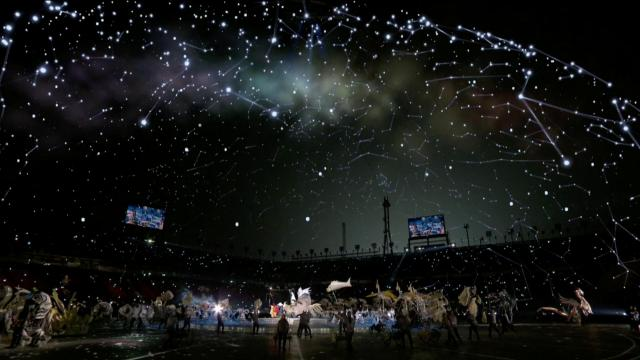
The audience present in PyeongChang didn’t get to experience the
display; the light particles were only visible on the TV screen.
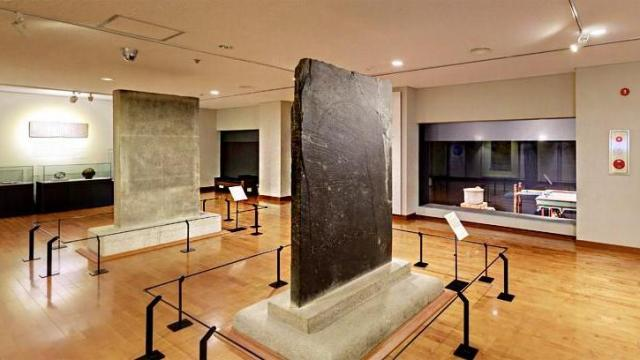
While watching the Opening Ceremony of the 2018 PyeongChang Winter Olympics, I heard a short two word phrase that grabbed my attention and curiosity: “star chart.” NBC host, Mike Tirico, said “ancient South Korean star chart” and I was curious to know more. He was explaining the dome on which the stars, as mapped by Korean astronomers in the 14th century, were projected. Cheonsang Yeolcha Bunyajido (“The Chart of the Constellations and the Regions they Govern”) is the second oldest surviving astronomical map in the world, created in 1394 under the Joseon Dynasty. 264 constellations are named among the 1,467 stars whose sizes vary based on apparent 
Cheonsang Yeolcha Bunyajido
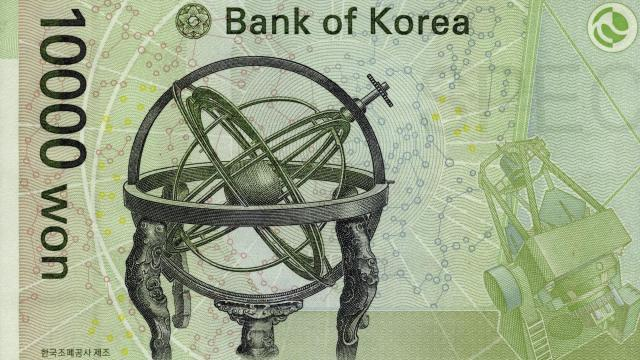
brightness in the night sky. The black marble stone, which measures 122.5 cm x 211 cm x 12 cm, is housed in the National Palace Museum of Korea in Seoul, deemed a National Treasure by the Korean government. The chart is pictured/depicted on the back of the Korean 10,000 won.


The armillary sphere is a revolving model of the celestial globe made up by rings and hoops once used by astronomers to plot the stars.         – Tony Rice, WRAL.com


I found it interesting to learn about the many scientific advancements made by this society under King Taejo, comparing it to the more common South American societies. Two other astronomy technologies were created, the Angbuilgu sun dial and the Chiljeongsan astronomical calendar ("Calculation on the Motions of the Seven Celestial Determinants"). You can read all about the Joseon Dynasty here.


National Palace Museum and Korean currency (~ 9 U.S. dollars)

Angbuilgu and Chiljeongsan 


Works Cited
Doo, Rumy. “[PyeongChang 2018] 3 Things You Might Have Missed about the Opening 
        Ceremony.” Korea Herald, 12 Feb. 2018.
“Joseon.” KOREAN CULTURAL CENTER, Korean Culture and Information Service.
Revolvy, LLC. “Cheonsang Yeolcha Bunyajido.” Revolvy, CC-BY-SA.
Rice, Tony. “Korea's Astronomical History Featured in Opening Ceremonies.”WRAL.com, Capitol 
        Broadcasting Company, Inc., 11 Feb. 2018.

Sunday, January 21, 2018

The Very Large Telescope

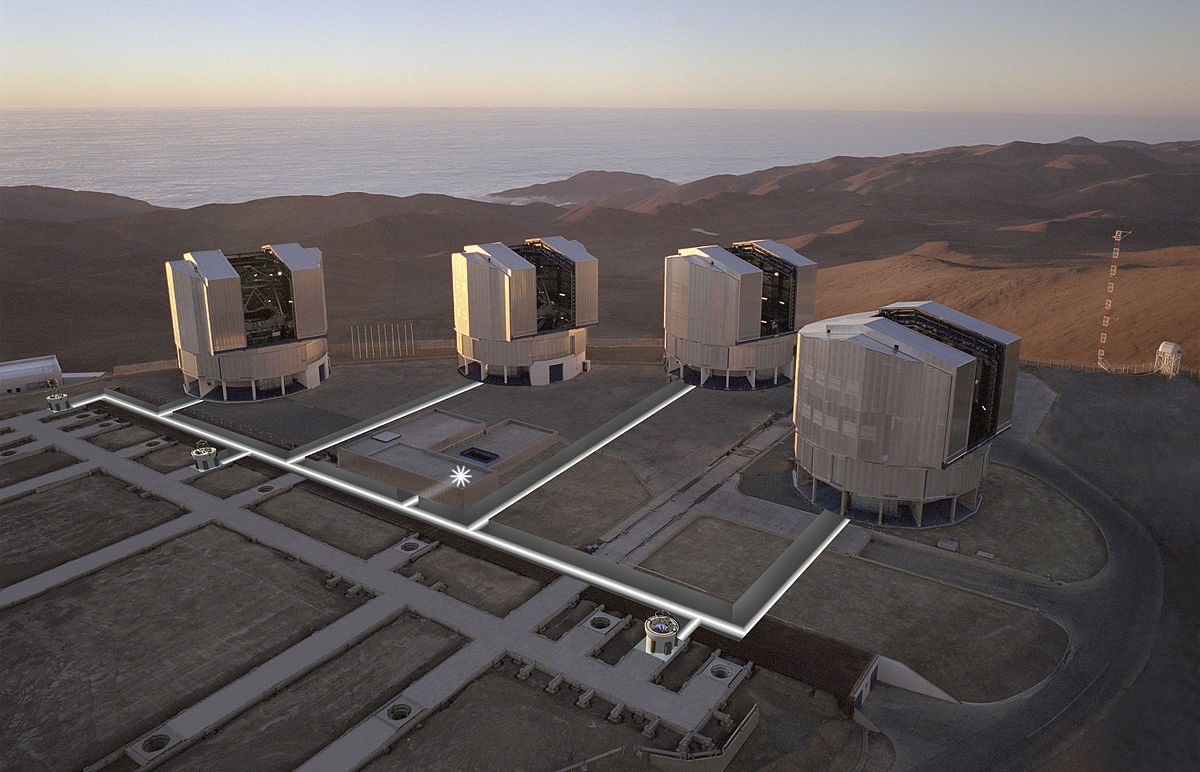
Image result for very large telescopeThe Very Large Telescope, owned and managed by the European Southern Observatory (ESO) is located in Cerro Paranal, Chile. The facility consists of four individual rotating telescopes, Antu (Sun), Kueyen (Moon), Melipal (Southern Cross), and Yepun (Venus), named from the indigenous Mapuche language. The elevation of the site is 2,635 meters. Construction of the VLT began in 1991 and it made its first observation in 1998.

Image result for very large telescope
The Very Large Telescope is an optical telescope that is able to detect ultraviolet, visible, and infrared light waves. It uses Ritchey-Cretien reflectors and interferometry, a technology that creates higher resolution images by combining light wave signals underground. The telescope is used to view deep space objects as faint as magnitude 30, which means they are four billion times fainter than what is visible to the naked eye. Each of the four unit telescopes has an aperture of 8.2 meters. The facility also has four smaller auxiliary telescopes, each of which is 1.8 meters in diameter. When combined through interferometry, the telescopes can have an aperture of up to 200 meters in diameter. Each unit telescope has an angular resolution of 50 milliarcseconds (an arcsecond measures the angle between two objects to the observer). When combined by interferometry, this resolution is reduced to only 2 milliarcseconds, which the ESO defines as being able to distinguish two points on the ISS separated by the width of a single sesame seed from Earth or being able to read a newspaper on the Moon!
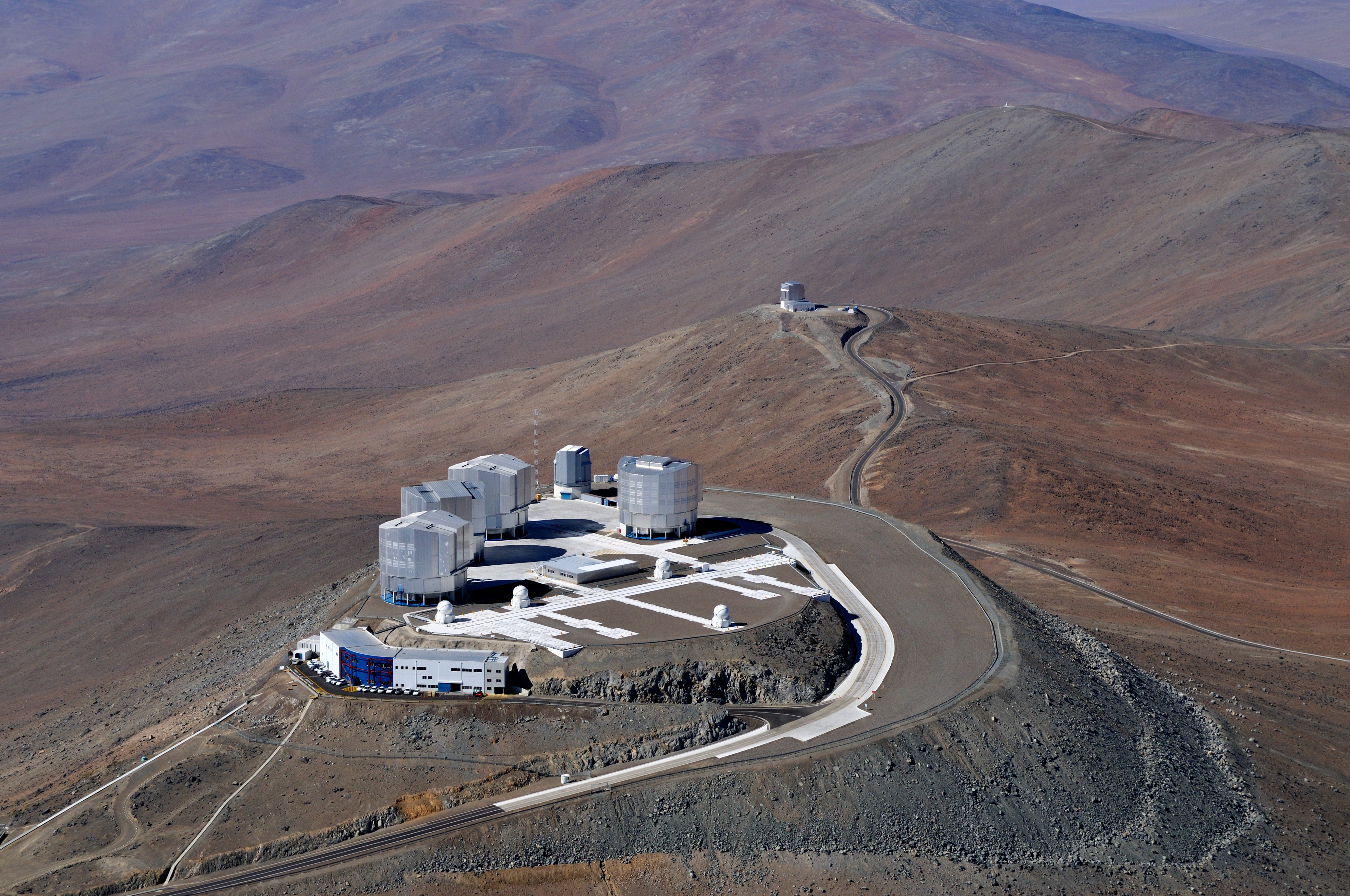
Image result for very large telescope
The VLT had made many discoveries including:
* discovered the most massive star, R136a1, which is 265x more massive than our Sun
* observed the afterglow of the furthest known gamma ray burst
* watches stars circle around the black hole at the center of our galaxy
* produced the first image of an exoplanet and measured the planet's mass
* discovered the Great Cold Spot on Jupiter


On the homepage of the website, you can view a live panoramic image of the Paranal Observatory which I have linked here with a map of the site, which includes its high-end "resort" called the Residencia where astronomers and engineers live.
http://www.eso.org/public/usa/teles-instr/paranal-observatory/vlt/ 

The last thing I have for you today is an amazing set of images taken by the VLT. The link below is from the ESO and contains 682 unbelievable, groundbreaking images. I scrolled through all 14 pages on the website clicking on the ones that I wanted to learn more about (which was a LOT). And not very far into the collection, my eyes were tearing up. Sure, I'm an emotional person, but looking at these sparked something in me. Inspiration? Hope? Just pure awe? I don't know what it was, but these pictures of deep space that are possible through the abilities of our own humankind truly struck me. 
I'll insert here some of my favorites:
http://www.eso.org/public/images/archive/search/list/1/?adv=&facility=31 
                                                 Jupiter                           Spiral Galaxy NGC 1232     


Red flames of Betelgeuse          Jewel Box cluster    


       Eta Carinae Nebula               Gas cloud being ripped 
                                                     apart by the black hole at the 
                                                 center of the Milky Way

Outbursts from a newborn star in the constellation Orion

Rosetta's Comet

Dust ring around the star           Globular cluster 47 Tuc
 HR 4796A in Centaurus                                                   

  
The protoplanet that orbits the             Colliding galaxies          
young star HD 100546 is seen                                                    
in the star's dust and gas                                                     
                                                   
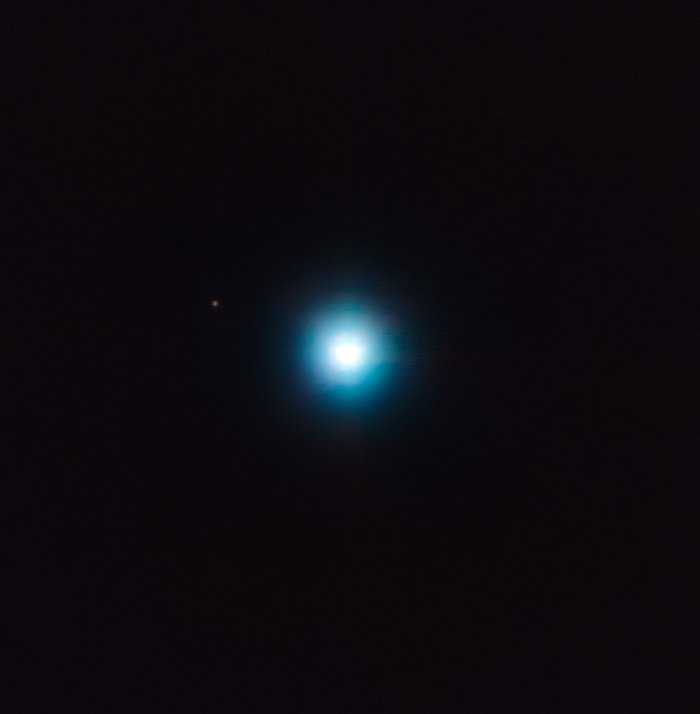
VLT snaps an exotic exoplanet “first”Triple quasar QQQ 1429-008
     Exoplanet CVSO 30c           Triple quasar QQQ 1429-008


Never forget to look up and beyond,
                                       🌠
    North Star Gazer 🔭


Works Cited

alienarka. "VLT Trailer 2009 (Paranal, Chile)." Online video clip. YouTube. 4 December 2009.
“Angular Measurements.” Cool Cosmos, IPAC-Caltech, coolcosmos.ipac.caltech.edu/cosmic_
        classroom/cosmic_reference/angular.html.
Ferris, Timothy. Seeing in the Dark: How Backyard Stargazers Are Probing Deep Space and Guarding
Earth from Interplanetary Peril. Simon & Schuster, 2002.
Greenhaven Press. Exploring Science and Medical Discoveries: Astronomy. Thomson Gale, 2006.
Gregersen, Erik. “Very Large Telescope.” Encyclopædia Britannica, Encyclopædia Britannica, Inc., 7
        Mar. 2016, www.britannica.com/topic/Very-Large-Telescope.
Nave, Rod. “Very Large Telescope (VLT).” HyperPhysics, hyperphysics.phy-astr.gsu.edu/hbase
        /Solar/VLT.html.
“Very Large Telescope.” ESO United States, www.eso.org/public/usa/teles-instr/paranal-
        observatory/vlt/.

Thursday, November 23, 2017

Mae Jemison

When I took AP U.S. History in high school, we did a project called "Historical Character Day" after completing the lengthy coursework and dreaded AP exam. We could chose to be any significant person in American history and had to pretend to be that person, introducing ourselves to the entire class and then interacting with other important, well-known people of history. So, as you might have already guessed, I chose to be Mae Jemison. 
portrait of Mae Jemison
The following is the information I collected as I prepared for Historical Character Day so that I would be able to fully know my person inside and out:


Name:  Mae Jemison
Born:  October 17, 1956
Contribution to History: the first black female astronaut


Significance to America:
  • First African American woman admitted to the space program and in space
    • Science Mission Specialist
  • Advocate for women’s and civil rights
  • Area Peace Corps medical officer for Sierra Leone & Liberia
  • Awards:
    • 1988 - Essence Science and Technology Award
    • 1992 - Ebony Black Achievement Award
    • 1993 - Montgomery Fellowship from Dartmouth College
    • 1990 - Gamma Sigma Gamma Woman of the Year
    • 1992 - public school in Detroit named after her
    • 2004 - International Space Hall of Fame
    • 1993 - National Women’s Hall of Fame
  • Organizations:
    • American Medical Association
    • American Chemical Society
    • American Association for the Advancement of Science
    • World Sickle Cell Foundation
    • American Express Geography Competition
    • Center for Prevention of Childhood Malnutrition
  • Established Jemison Group, a company for research, development, and marketing of advanced technologies
  • Established The Earth We Share, a science camp to encourage (especially girls) to learn about science & global issues
Fun Facts:
  • She can speak Russian, Japanese, and Swahili
  • She started college at Stanford University at 16 years old and then went on to med school at Cornell
  • She worked in Cambodian refugee camps
  • Her space shuttle, Endeavour, was the only one named by children
  • Was featuered in LEGO's "Women of NASA" set [read my post about it here]
  • Made an appearance in Star Trek: The Next Generation
  • Is an advocate for peace and equality
  • Favorite Hobby: theater/dance
  • Favorite Music: modern jazz, African dance, West Side Story
  • Favorite Book: A Wrinkle in Time & The Arm of the Starfish [because they each feature female scientists heroines]
  • Favorite Subject in School: science and technology, but also loved art just as much
  • Other Interests:
    • cooking
    • watching movies
    • weight lifting
    • gardening
    • traveling
    • photography
    • skiing
    • volleyball

As part of the project, I had to describe the type of person I'd see myself (Mae Jemison) getting along with the best:
Someone who supports human rights and has a heart for all people no matter their race, gender, social standing, etc. Someone who is interested in science and technology, but also has an appreciation for the arts. Someone who loves learning and new experiences and is always up for an adventure and likes nature and serving others. Someone who will support me on all my endeavors (no pun intended).

Image result for mae jemisonWe also had to bring in a food that the person liked/would have eaten in that time. I spent a long time looking for different 'space food' recipes and came across a video of Chris Hadfield making a sandwich out of a tortilla with peanut butter and honey. They use tortillas in space instead of bread because it doesn't make crumbs and it is more compact, thus avoiding bread crumbs from floating around in zero gravity. So I brought in these 'Space Shuttle Sandwiches' or what I liked to call PB&Jems.


On Historic Character Day, I wore a NASA tee shirt and I even spoke a little bit of Swahili ... or what I was able to learn from Google Translate ;)
Unaweza Daima Ngoma Kama Wewe Ni Daktari Lakini Huwezi Daktari Kama Wewe Ni Damfe  -- “You can always dance if you’re a doctor, but you can’t doctor if you’re a dancer”

Some of the amazing people I (as Mae Jemison) had the opportunity to interact with included: Thomas Edison, Grace Hopper, Elizabeth Blackwell, Louis Armstrong, Sally Ride, Maya Angelou, Eleanor Roosevelt, JFK, and Amelia Earhart ... all of whom were fellow scientists, aviators/astronauts, feminists, and African Americans from various time periods.

Finally, here are a few other quotes from Mae Jemison that I came across in my research that I enjoyed:
“Some of the most fun people I know are scientists” 

“I stayed in the astronaut program until 1993. People ask me why I left. I thought I had a lot of things to contribute that would be difficult to do if I stayed. I thought I could have a stronger voice as an advocate for space exploration. So I ended up starting my own technology consulting company”

“What we find is that if you have a goal that is very, very far out, and you approach it in little steps, you start to get there faster. Your mind opens you to the possibility."
                                                      ♡ 

Tuesday, August 8, 2017

What are Solar and Lunar Eclipses?

In anticipation of the solar eclipse that is quickly approaching - just about two weeks, I thought I'd give a really brief explanation of both solar and lunar eclipses.

solar eclipse


When positioned just right, the moon {new moon} will completely block the sun in a total eclipse - this is what we'll see on August 21st. (There are also partial solar eclipses).


lunar eclipse

Now with the earth aligned in the middle, the moon {full moon} will not be exposed to the sun at all, blocked by the earth's shadow. Aristotle (384-322 B.C.)  used his observation of a lunar eclipse to prove that the earth was round.